Compassion Focussed Therapy (CFT) was developed by Professor Paul Gilbert, University of Derby. His model weaves together neurophysiology, evolutionary psychology and models of attachment to make sense of human distress. His model promotes Compassion as a concept that can be taught and learned, and if practised, can alleviate suffering and promote personal growth. Gilbert uses the three circles model to enable us to understand how the brain regulates emotion. The aim of CFT is to develop better balance between the three systems.
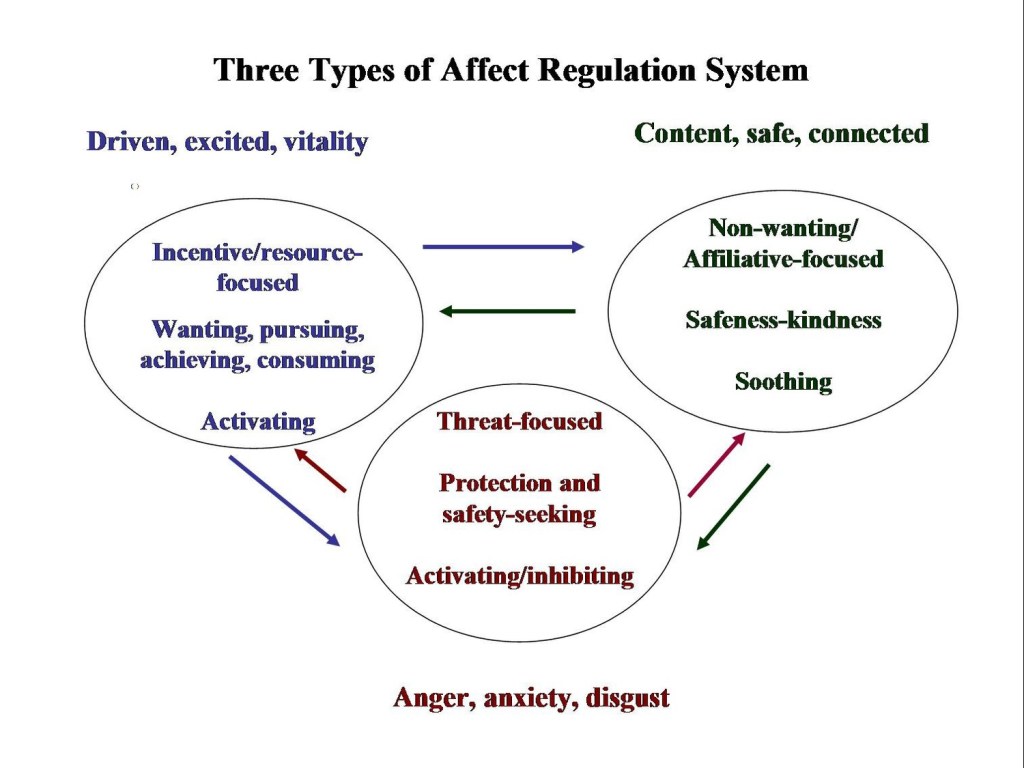
Paul Gilbert (2009)
The idea is that we learn to tap into our own inner, soothing resources to enable us to face, with courage, our distress and self-criticism. Rather than beating ourselves up when setbacks occur, we learn to be kinder, wiser and less judgemental, to encourage ourselves with warmth rather than harsh criticism. CFT also encourages us to reach out to others with emotional honesty to increase connection and to demonstrate compassion towards others. Practising compassion has been linked to an increase in contentment and well-being, and reduction in distress in those who have experienced loss, trauma, pain and those diagnosed with anxiety, depression and psychosis. The model provides a non-blaming, compassionate understanding of mental health, helping to normalise distress within the context each person finds themselves in.
 Sea change